
Analysis by E.H. Bradford
AI Industry Reporter & Reality Correspondent
Project Genie Is Not Your Next Side Hustle Tool — It's a Glimpse of How "Content" Will Turn Into Worlds
Google just gave a few people the keys to walk inside their prompts. That's not the story creators should be obsessing over.
When a Prompt Turns Into a Place
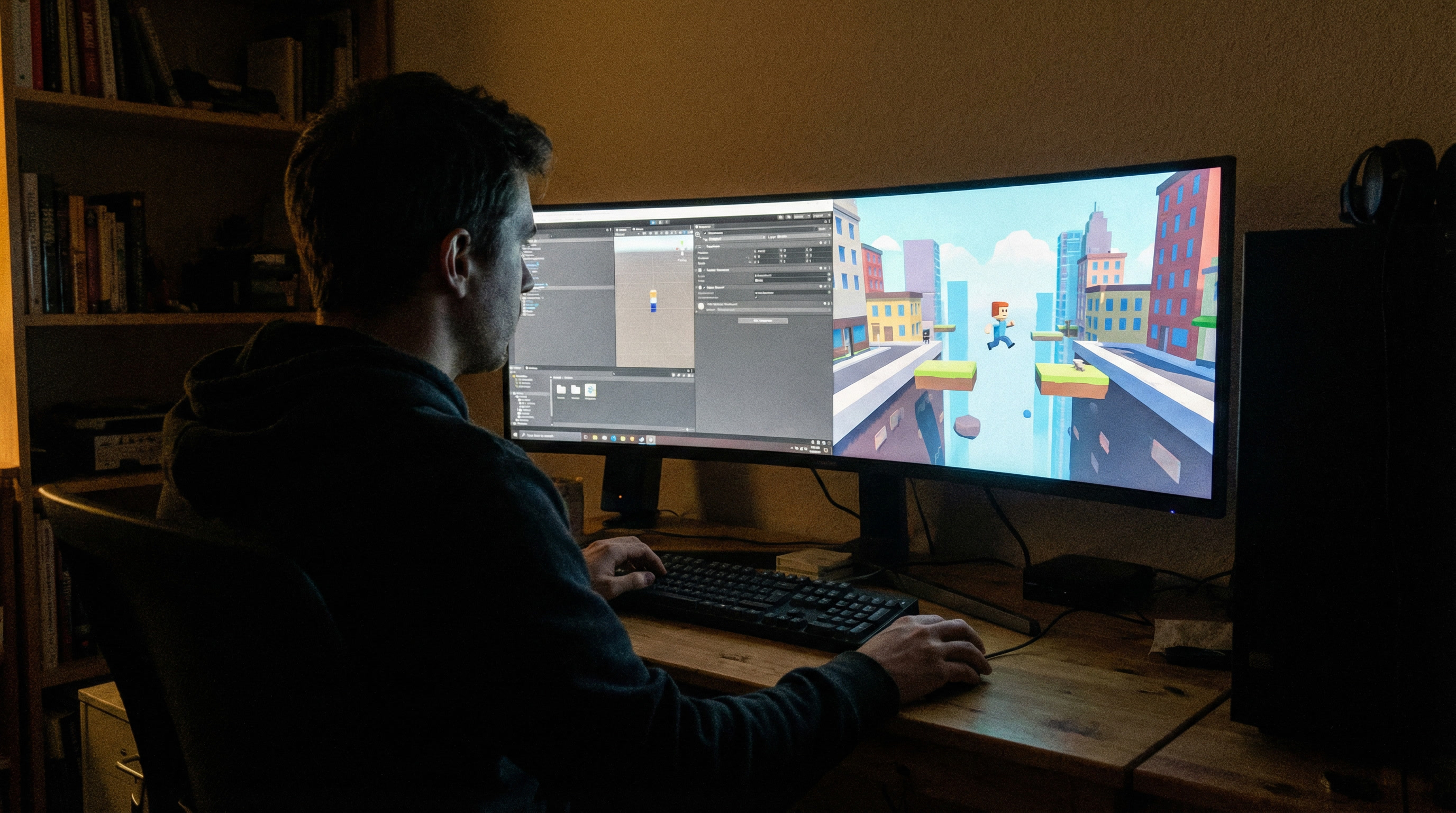
Blink and you might miss it in the AI news firehose: Google quietly flipped a switch and let a handful of paying users step inside their prompts. With Project Genie, you type a description or upload a single image, wait a few seconds, and suddenly you're steering a character through a playable 3D world that didn't exist a minute ago.
You get around 60 seconds to roam at roughly 720p, recorded at about 24 frames per second, then the run is over and saved as a video clip. For anyone who's lived in 2D — images, shorts, carousels — it feels less like generating content and more like opening a trapdoor into a level your imagination forgot it built.
The Catch Hidden Behind the Wow
The magic trick comes with fine print that most headlines tuck into the bottom third of the article. This is where the gap opens up between "cool demo" and "tool that actually makes you money."
- Project Genie sits behind Google's AI Ultra plan at about 249.99 USD/month, and it's currently limited to U.S. users 18 and up.
- Each world is short-lived — roughly a minute of interaction per run — because Genie is generating the world, frame by frame, as you move.
- You don't get game-ready 3D assets; you walk away with a temporary experience and a video, not something you can drop into Unity or Unreal and ship.
For solo creators and small businesses, those constraints shift Genie from "new everyday app" into "specialty lab tool" that has to justify a premium space on the credit card. The glossy trailers don't show that part, but your bank account will.
What's Actually New Under the Hood
Strip away the marketing, and Genie is a public window into something much more ambitious: world models. Instead of just generating a single frame on demand, Genie 3 simulates an environment that can stay coherent as you walk, jump, or drive through it.
You move using familiar game controls, and the world streams in around you: perspective, physics, and interactions unfold as you explore, not in a fixed, pre-rendered sequence. The same underlying approach is already being discussed for robotics, training simulations, and complex planning — places where AI needs to understand how actions play out in space, not just in text.
Where the Fantasy Collides With Reality
The internet loves a clean story: "Now you can build games with no code." But when you look at technical breakdowns and early hands-on reports, Genie lives in a narrower lane.
- It's powerful previsualization: a fast way to sketch the mood, layout, and basic feel of an idea.
- It is not a full production pipeline for polished, commercial games or rich, persistent experiences.
- You don't control every mechanic, system, or asset the way you would in a traditional engine.
In other words, Genie is fantastic at helping you explore whether something feels promising, but it doesn't carry you over the finish line. The danger zone is creators quietly burning months of a 249.99 USD/month tool trying to make it do a job it was never meant to do.
How Pros Will Quietly Use Project Genie
If you follow the workflows, not the hype, you start to see where Genie actually fits into a real business. The pros won't lead with "look what AI can do" — they'll tuck Genie into the background of deals and decisions.
- Pitch fuel: Agencies and studios drop a one-minute Genie walk-through into client decks — "Here's your potential brand world in motion" instead of static moodboards.
- Pre-viz on fast-forward: Directors, animators, and game teams test staging, movement, and basic camera ideas before committing serious time to 3D or live shoots.
- Live world-building moments: Educators and streamers turn viewer prompts into explorable spaces on the fly, transforming passive "prompt watching" into a small shared event.
None of these use cases require exportable assets or hour-long sessions. They rely on that short burst of impact: giving a stakeholder, a viewer, or a student a quick, visceral sense of what an idea could become.
What This Signals for Creators and Small Businesses
Even if you never pay for AI Ultra, the trajectory that Genie represents is hard to ignore. World models like Genie 3 are moving AI from "generate a piece of content" toward "sustain an environment where things happen over time."
For creators and small teams, that points toward a near future where:
- Product launches don't just get a teaser video; they get a tiny interactive world customers can explore for a minute.
- Courses and workshops use generated spaces as examples and exercises, not just slides and talking-head segments.
- Brand storytelling feels more like "step into our universe" than "scroll through our posts."
The first wave of tools that make this cheap and ubiquitous probably won't look like a 249.99 USD research-tier product. But the people who already know how to think in storyworlds, interactive moments, and spatial experiences will be ready the moment prices drop.
If You're Building a Business, Not a Lab
For most solo creators and small businesses, the smartest move right now is not to chase every premium prototype, but to build around the shift it reveals. That means separating "tools you rent for experiments" from "tools that feed your funnel every week."
- Protect your core stack: Keep your real budget aimed at AI that reliably supports what you already sell — writing, video, image, email, and automation tools that push out content and offers consistently.
- Treat Genie as a case study: Use public demos, articles, and clips in your content to explain the shift from "content" to "worlds" for your own audience.
- Build world-thinking into your products: Design frameworks, prompts, and digital products that treat brands, books, and ideas as worlds long before your audience ever logs into a Genie-like tool.
Project Genie probably isn't the subscription that gets you out of survival mode. But it is a very public preview of the terrain you'll be building on a couple of cycles from now — and that's where it earns a spot on your radar.
Sources & Further Reading
- Google DeepMind — Project Genie: Experimenting with infinite, interactive worlds
- Ars Technica — Google Project Genie lets you create interactive worlds from a photo or prompt
- Google Labs — Project Genie (official page)
- Genie 3 — Interactive world model overview
- AI Certs — Project Genie debuts for Google AI Ultra subscribers
- ALM Corp — Project Genie technical analysis and applications
- AI Business Review — AI world generation and business implications
- Toolworthy — Project Genie review and pricing notes
- Google Cloud — Real-world gen AI use cases
- Lens on Luxury — Google's AI tools for small businesses
📢 Found this Project Genie analysis helpful?
Share Bradford's take on AI world generation with fellow creators and tech watchers:
Loading recommendations...