
Analysis by E.H. Bradford
AI Industry Reporter & Reality Correspondent
When AI Hits the Factory Floor, Experience Still Wins
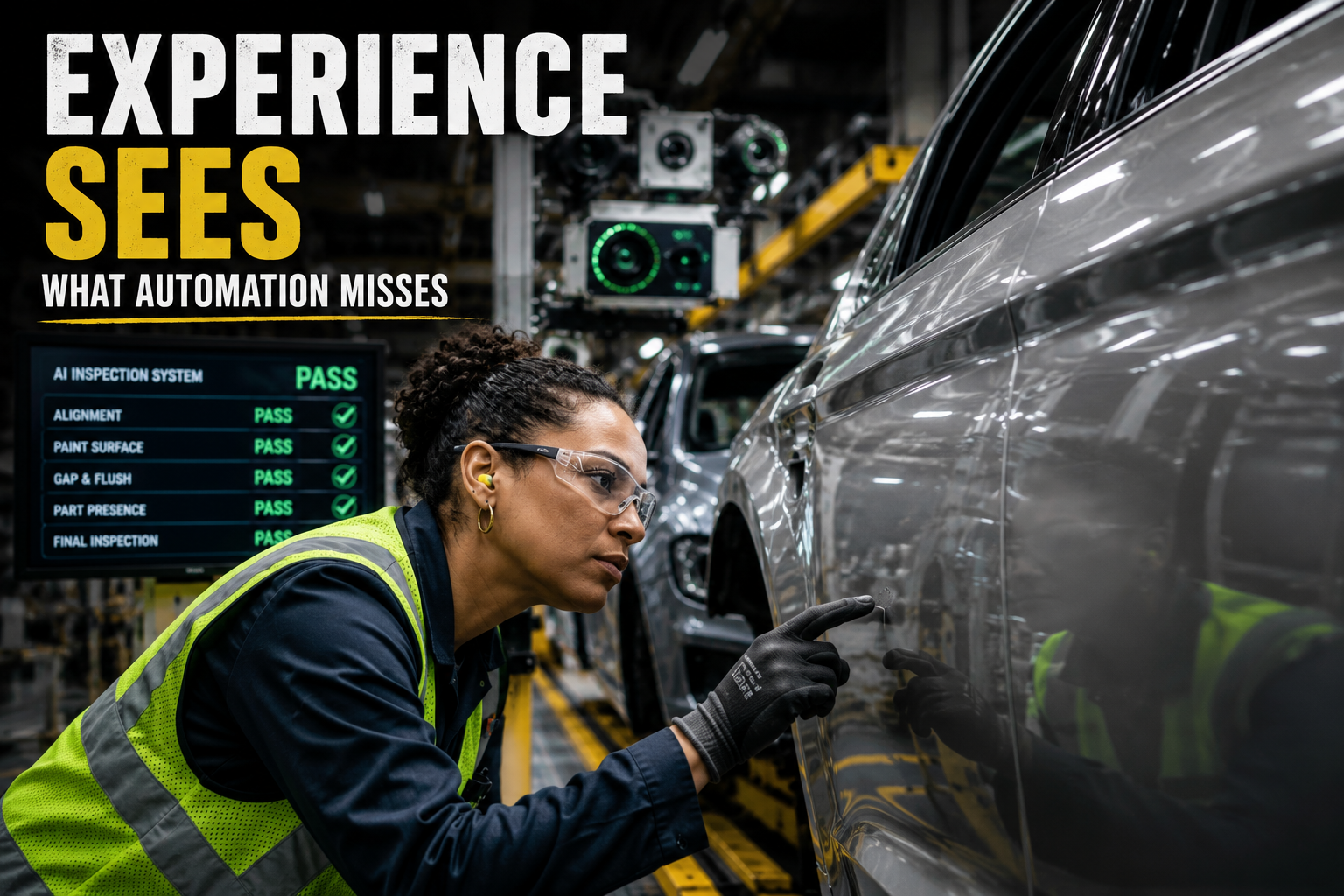
Ford’s decision to bring back a small group of experienced engineers is a clean, concrete reminder that AI is not the same thing as judgment. The company didn’t abandon automation; it ran into the hard limit where software could spot patterns, but could not replace the seasoned eye of people who spent decades learning what “off” really looks like.
When Automation Meets the Real World
This is the kind of story that cuts through AI hype because it lands in the real economy, not a tech demo reel. Ford reportedly rehired around 300 to 350 veteran engineers and quality inspectors after its AI-driven quality checks fell short. These specialists aren't just papering over defects; they are actively retraining staff and tuning the machine learning algorithms that missed the mark.
The immediate corporate impulse during a tech transition is often to clear out senior headcount to balance the books, assuming software can bridge the gap. But Ford’s miscalculation exposes a deeper risk for any business scaling with technology: losing the institutional memory required to recognize bad output before it becomes an expensive, public disaster. If a multi-billion-dollar automaker can misjudge the line between pattern recognition and actual product wisdom, a solo creator or small agency can easily make the same bet with their client workflows.
What Ford Learned the Hard Way
A close look at the reporting from BBC News and the original coverage by Bloomberg reveals that Ford’s issue wasn't a total failure of technology. Instead, the automated inspection systems simply lacked context. The company discovered that the tools were blind to subtle variations that a human specialist catches in seconds.
By bringing back these "gray beard" engineers, Ford is attempting to retroactively inject human taste and history back into a digital system.
The Cost of Silent Knowledge Drift
There is an even quieter danger here that most small businesses miss: cognitive atrophy. When you automate the entry-level sweeps—the first-draft copy, the basic code generation, the preliminary data sort—you don't just save time today. You quietly dismantle the training pipeline for tomorrow.
If a freelancer delegates 100% of their fundamental execution to an LLM, they stop building the creative muscle memory required to spot high-level hallucinations. Without that grind, you lose the ability to tell the difference between an output that looks professional and one that actually works. Five years from now, if the software does all the heavy lifting, who steps into the role of the veteran?
Why Judgment Remains the Scarce Resource
Let’s be direct: the tech industry promises that models replace judgment, but reality shows that judgment remains the ultimate scarce asset. Ford didn’t solve its quality issues by deploying a model and walking away; it had to protect its core business by paying for human oversight.
For a service provider or small team, the analogy is exact. AI can draft an email sequence, sort incoming leads, or flag an outlier in a spreadsheet, but it cannot tell you which customer complaint is a statistical fluke and which one represents a fundamental flaw in your product line. That specific, unmapped understanding of context is your real business moat.
How to Build Human-in-the-Loop Workflows
To avoid automating your way into a quality trap, you need a clear boundary between mechanical execution and human taste.
For Solo Creators & Freelancers
- The 80/20 Audit: Break your weekly tasks into raw labor and final approval. Let software handle the bulk formatting, transcription, and initial drafting (the 80%), but reserve the final edit, tone check, and strategic positioning (the 20%) entirely for your own eyes. This preserves your unique perspective while eliminating operational drag.
- Establish an Escalation Protocol: Never allow an AI-generated asset to hit a client or a live production server without a formal human sign-off. Treat the model like an enthusiastic, unseasoned intern whose work always requires a second look (maybe even a third look).
For Small Business Teams
- Encode Your Proprietary Taste: Instead of using generic prompts, feed your specific brand history, past successful campaigns, and hard-won lessons directly into custom tools or internal knowledge bases. This helps the system mimic your context rather than delivering generic text.
- Protect Your Junior Training: If you use automation to speed up junior tasks, ensure those team members are tasked with auditing the AI's work rather than just copying and pasting it. This keeps them engaged in critical thinking and builds the diagnostic skills they will need as senior decision-makers.
Bradford’s Take
This isn't a story about technology losing. It’s a story about the corporate fantasy of replacing experience too early. The real competitive edge isn't a binary choice between human workers and software. It’s knowing which decisions require memory, context, and care, and which can be safely delegated to an algorithm.
If your workflow relies entirely on specialized expertise, don't delete the expert. Preserve that knowledge, pay for it, and use software to amplify it instead of pretending it's obsolete.